


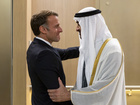
French President Emmanuel Macron has secured the delivery of an additional 200,000 tons of diesel per month from the United Arab Emirates and Bahrain during a tour of the Gulf, the French presidency said on Tuesday.
He obtained commitments for around 100,000 tons per month from the Emirates, while an additional 100,000 tons monthly will be secured during the stop in Bahrain, the Elysee Palace said.
 Full Story
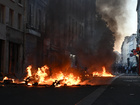
The Champions League showpiece between Paris Saint-Germain and Barcelona will go ahead as planned on Tuesday in Paris, the French interior minister confirmed despite violent weekend protests.
Many French citizens have been left shocked by the images of violence that have drawn worldwide attention and highlighted the country's tense social climate. On Monday, French Prime Minister Sébastien Lecornu said he instructed prefects to impose "very limited" and "localized" curfews in cities to prevent more rioting and looting.
 Full Story
UEFA has given FIFA a Nov. 2 deadline to release documents relating to Gianni Infantino 's aborted attempts at a secretive investment plan for the World Cup and other governance issues.
The latest move in a power struggle between the two governing bodies came in the week after UEFA's European delegates were disappointed by what they perceived as a lack of clarity by FIFA president Infantino over the issues at a FIFA council meeting last week.
 Full Story
Walking out on the Portugal camp earned Cristiano Ronaldo a 30-day suspension and 255 euros ($285) fine from the national federation.
The Portuguese Football Federation had provisionally suspended Ronaldo and on Monday called the punishment "adequate and sufficient."
 Full Story
U.S. futures are mostly lower as artificial-intelligence stocks come under pressure again and oil prices rose amid sporadic fighting in the Middle East.
Futures for the S&P 500 fell 0.1% on Tuesday, while those for the Nasdaq declined 0.5%. Futures for the Dow Jones Industrial Average gained 0.2%.
 Full Story
Online services for a number of U.K. banks in and around London were disrupted by a Google Cloud outage Tuesday.
The cloud outages began just after 2 a.m. eastern, or 6:08 a.m. GMT.
 Full Story
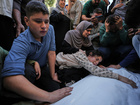
The Israeli military struck an apartment in Gaza before dawn, killing two people and injuring others.
The two people killed were a man and his wife, according to Shifa Hospital, which received the bodies.
 Full Story
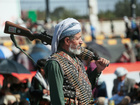
The death toll from a Houthi missile strike on a government military camp in southern Yemen rose to 60 people, primarily new recruits, making it the deadliest strike since fighting in the country began escalating three months ago, Yemeni officials said Tuesday.
At least a dozen people were still missing a day after the Iranian-backed rebels hit the al-Alam training camp in the southern province of Shabwa with ballistic missiles, three officials said.
 Full Story
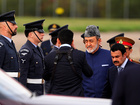
King Charles III will welcome Sultan Haitham bin Tarik of Oman to Windsor Castle on Tuesday at the start of a three-day state visit as Britain seeks to bolster a strategically important ally squeezed by both sides in the U.S. war against Iran.
The sultan will be greeted with a royal gun salute, a carriage ride through the town of Windsor and a military honor guard before a glittering state banquet Tuesday night at the palace. On Wednesday, the sultan will hold talks with Prime Minister Andy Burnham and give a speech to business leaders in London before his departure the following day.
 Full Story
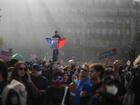
Rising fuel costs, discontent with the state of schools, declining public services and a housing crisis are fueling an autumn of protests in Europe.
Crowds have protested for weeks in major cities, with some demonstrations marked by arrests, looting, injuries and violence across France, Italy and Albania. In Spain and Portugal, tent camps have sprung up to protest unaffordable housing.
 Full Story


