


Top diplomats from key regional powers were gathering in Pakistan on Sunday to discuss how to end the fighting in the Middle East, but there were few signs of progress as Israel and the U.S. kept up strikes on Iran, and Tehran responded by firing missiles and drones across the region.
Pakistan said foreign ministers from Saudi Arabia, Turkey and Egypt were participating in the talks in Islamabad. Pakistani Prime Minister Shehbaz Sharif said he and Iranian President Masoud Pezeshkian held "extensive discussions" on regional hostilities.
 Full Story
Three Lebanese journalists were killed on Saturday by an Israeli strike that targeted their vehicle in southern Lebanon, a military source told AFP.
 Full Story
Iran has agreed to allow humanitarian aid and agricultural shipments through the Strait of Hormuz following a request from the United Nations.
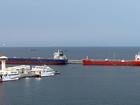 Full Story
Pakistan said Saturday Saudi Arabia, Turkey and Egypt will send their top diplomats to Islamabad for talks aimed at ending the Iran war.
 Full Story
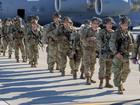
More than two dozen U.S. troops have been wounded in Iranian attacks on Saudi Arabia's Prince Sultan Air Base in the past week, according to two people who have been briefed on the matter.
 Full Story
Iranian-backed Houthi rebels claimed a missile launch toward Israel early Saturday, their first since the war in the Middle East started. The Israeli military said it intercepted the projectile.
The war, now marking its one-month anniversary, erupted after the United States and Israel attacked Iran, which retaliated with strikes against Israel and neighboring Gulf Arab states. The conflict has upended global air travel, disrupted oil exports and caused fuel prices to soar. Iran's stranglehold on the Strait of Hormuz, a strategic waterway, has also exacerbated the economic fallout of the war.
 Full Story
Iran appears to be setting itself up as the gatekeeper for the Strait of Hormuz, the world's most important artery for oil shipments. The move could cement Tehran's de facto chokehold over the crucial waterway and formalize its ability to keep its own oil flowing to China.
Iranian communications to the United Nations maritime authority and the experience of ships transiting the strait suggest the creation of something akin to a "toll booth." Ships must enter Iranian waters and be vetted by Iran's Islamic Revolutionary Guards Corps. At least two vessels have paid for passage.
 Full Story
As fears of a wider regional conflict escalate following U.S. and Israeli strikes on Iran that began in late February, Pakistan has emerged as an unexpected mediator, offering to help bring Washington and Tehran to the negotiating table.
Islamabad isn't often called on to act as an intermediary in high-stakes diplomacy, but it's stepped into the role this time for a number of reasons, both because it has relatively good ties with both Washington and Tehran and because it has a lot at stake in seeing the war resolved.
 Full Story
Group of Seven foreign ministers met on Friday in France to discuss the Russia-Ukraine conflict, with deep divisions apparent over the U.S.-Israeli war with Iran, following U.S. President Donald Trump's repeated complaints that America's allies have ignored or rejected requests for help in the military operation and in confronting Iran's retaliatory attacks, including the closure of the Strait of Hormuz to most international shipping.
U.S. Secretary of State Marco Rubio joined his counterparts from the G7 just 24 hours after Trump's latest round of insults lobbed at NATO and as instability in oil markets persisted with the Iran war entering its fourth week along with uncertainty over the status of potential negotiations to end the crisis.
 Full Story
The Saudi Embassy in Beirut said in a statement Friday that the decision is related to the “repercussions of the current events” taking place in Lebanon.
The embassy added that Saudi Arabia’s travel ban to Lebanon has been in place for years.
 Full Story


