


The Trump administration released new fuel economy standards Monday that relax regulatory requirements for automakers to control pollution from gasoline-powered cars and light trucks.
Fuel economy requirements set out how far new vehicles need to travel on a gallon of gasoline. The change furthers President Donald Trump's promise to revoke policies that encouraged or created incentives for the production of electric vehicles.
 Full Story
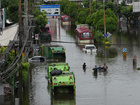
Rain eases in Bangkok but persistent flooding forces thousands to leave home
Rain eased in Thailand 's capital on Sunday, but flooding persisted in several low-lying areas, with thousands forced to move into temporary shelters. At least eight people were reported killed in the past 10 days nationwide.
 Full Story
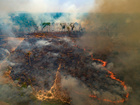
A United Nations report released Thursday shows that there is still a multibillion dollar funding gap for preserving tropical forests, which are key to fighting climate change.
A new fund that aims to raise $100 million for firefighting in South America, home to the Amazon rainforest, was announced this week at New York Climate Week and the U.N. General Assembly. But the funding excludes vast swathes of forests in Africa and Southeast Asia.
 Full Story
Five cheetah cubs had to survive a weather scare and the illness of their mother after their birth at the Prague Zoo. But they are doing well now, the zoo said on Friday.
The zoo said the quintuplets — four males and one female — that were born on June 18 had faced a tough time from the start.
 Full Story
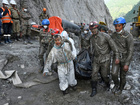
Nepal's prime minister scolded fellow world leaders Thursday, saying the nation's recent deadly flood reminds a warming world that climate change keeps hurting people who didn't cause the crisis but now need help.
The August disaster "was not just a local tragedy. It was a warning to the world. And I ask you today: Have you really heard that warning?" Nepali Prime Minister Balendra Shah said at the U.N. General Assembly on Thursday night. "Nearly three years ago, standing in the shadow of our Mount Everest, the secretary-general of the United Nations warned about humanity about the madness and impending climate disaster."
 Full Story
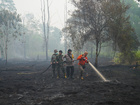
This year's powerful El Nino and the record global heat it's driving, along with severe droughts, wildfires and shrinking water supplies, could lead to nearly half a million more deaths worldwide by the end of February, according to a research report released Wednesday.
The grim warning by the University of Chicago-based Climate Impact Lab says that as many as 451,000 more heat-related deaths between June and the end of February could be attributed to El Nino, compared with heat deaths expected in a typical year.
 Full Story
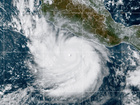
Powerful Hurricane Polo sent bands of heavy rain across Mexico's Pacific coast Thursday as a growing Tropical Storm Nolo approached Hawaii with the potential for catastrophic flooding.
Polo was forecast to maintain Category 5 strength as it skirts Mexico's coast over the next few days. Rain and strong winds had already started to pummel the coast, with waves crashing onto the normally pristine beaches.
 Full Story
In the tangled greenery of a Ugandan national park, mountain gorillas sit among the leaves, calmly carrying on as tourists trek into their forest home.
Many gorilla families are used to people, but while their population grows, the forest available to them does not.
 Full Story
All signs are pointing toward a record-breaking El Nino this year, which experts say may cause severe drought in Asia and other extreme weather across the world, threatening food security for millions of people.
El Nino is part of a natural climate cycle of warming ocean temperatures, but this year's is expected to reach new extremes of drought, heat waves, flooding and other climate-related disruptions in South America, Africa and Asia.
 Full Story
Major global oil companies are treating the atmosphere like an "open sewer," the outgoing United Nations chief Antonio Guterres said Tuesday in a withering attack on the energy industry at the UN's high-level meeting.
 Full Story


