


A woman reported to be visiting Australia from China has died after eating a toxic Death Cap mushroom -- the third such fatality in the southern nation this year.
The woman, aged in her 50s, died Friday at the Austin Hospital in Melbourne, two days after being admitted with severe poisoning due to ingestion of the fungi, which resembles the Paddy Straw mushroom, a popular delicacy in Asia.
 Full Story
A vaccine which revives a promising but long-abandoned path to thwart Alzheimer's disease has cleared a key safety hurdle in human trials, researchers say.
In a small-scale test, the formula was found to be safe and primed the body's frontline defenses against protein deposits in the brain that are associated with the catastrophic disease.
 Full Story
Pneumonia and diarrhea are among the top causes of childhood deaths around the world, particularly among the poor, said a report out Friday by the U.N. Children's Fund.
UNICEF said that while these two diseases kill more than two million children each year, making up 29 percent of child deaths under age five worldwide, some simple interventions could save lots of lives in the coming years.
 Full Story
Japanese researchers have created a functioning human liver from stem cells, a report said Friday, raising hopes for the manufacture of artificial organs for those in need of transplants.
A team of scientists transplanted induced pluripotent stem (iPS) cells into the body of a mouse, where it grew into a small, but working, human liver, the Yomiuri Shimbun said.
 Full Story
Scores of Taiwanese activists staged a protest in Taipei on Friday against U.S. beef containing the feed additive ractopamine ahead of a parliamentary vote on a controversial bill to allow such imports.
"American bullies, toxic beef," the protesters shouted, waving matching placards as they rallied outside the de facto U.S. embassy in Taipei.
 Full Story
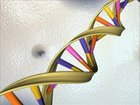
An increasingly detailed map of the genome of a fetus could lead to easier screening for a host of rare disorders, according to U.S. research published Wednesday.
Although previous studies have shown that the fetal genome can be glimpsed with just a sample of the mother's blood, the latest research offers a more accurate view of the fetal makeup by combining paternal and maternal DNA, said the authors of the study in the journal Science Translational Medicine.
 Full Story
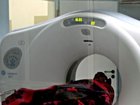
Children exposed to multiple CT scans could be up to three times likelier to contract cancer of the blood, brain or bone marrow later in life, according to research published Thursday.
Writing in The Lancet medical journal, a team of scientists in Canada, Britain and the United States said the cancer risk, in absolute terms, appears to be small.
 Full Story
China faces a "serious epidemic" of drug-resistant tuberculosis according to the first-ever nationwide estimate of the size of the problem there, said a U.S.-published study on Wednesday.
"In 2007, one third of the patients with new cases of tuberculosis and one half of the patients with previously treated tuberculosis had drug-resistant disease," said the study in the New England Journal of Medicine.
 Full Story
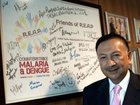
A Malaysian prince is promoting a novel weapon against the worsening scourge of dengue fever: a protein "pill" that starves mosquito larvae and could revolutionize the global dengue fight.
It is a fight that is intensifying: more than 2.5 billion people -- around 40 percent of Earth's population -- live in areas susceptible to the mosquito-borne virus, with up to 100 million infected annually, according to the World Health Organization.
 Full Story
A potentially dangerous sexually transmitted disease that infects millions of people each year is growing resistant to drugs and could soon become untreatable, the World Health Organization said Wednesday.
The U.N. health agency is urging governments and doctors to step up surveillance of antibiotic-resistant gonorrhea, a bacterial infection that can cause inflammation, infertility, pregnancy complications and, in extreme cases, lead to maternal death. Babies born to mothers with gonorrhea have a 50 percent chance of developing eye infections that can result in blindness.
 Full Story
