


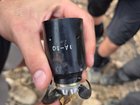
An Israeli high school student was killed and two dozen other people injured Monday by a suspected leftover Hezbollah bomb as they hiked near the Lebanese border, Israeli officials said.
 Full Story
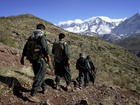
Turkey's intelligence services on Monday said PKK militants had withdrawn from four key bases in northern Iraq, confirming a move announced by the Kurdish group last week.
"Four PKK hideouts in the Metina and Baze regions of northern Iraq were evacuated as of October 8," security sources said in a statement carried by state news agency Anadolu that was widely understood to be from Turkey's National Intelligence Organization (MIT).
 Full Story
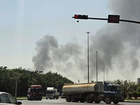
Saudi Arabia's civil aviation body Monday extended the suspension of operations at Riyadh's international airport following a series of deadly Houthi attacks.
"The General Authority of Civil Aviation has announced the extension of the suspension of operations at King Khalid International Airport in Riyadh in order to complete the necessary procedures to verify the safety of the facilities and their operational readiness," the authority said in a statement, without specifying when operations would resume.
 Full Story
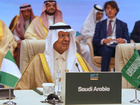
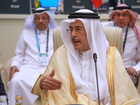
Saudi Arabia's energy minister acknowledged on Monday that the kingdom's infrastructure and resilience had been tested, as he vowed a firm response following a wave of deadly attacks by Yemen's Houthis.
The Houthi attacks over the weekend marked a sharp escalation in the Yemen war, where Saudi Arabia has long supported the internationally recognized government.
 Full Story
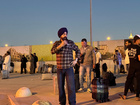
Iran said Monday it was "deeply concerned" by escalating attacks between Yemen's Tehran-backed Houthis and Saudi Arabia, after 14 people died in strikes on Riyadh's airport over the weekend.
"We are deeply concerned about the developments taking place in the Arabian Peninsula," foreign ministry spokesman Esmaeil Baqaei told a weekly press conference, adding that Tehran was ready "to use our good offices to help facilitate dialogue between the parties".
 Full Story
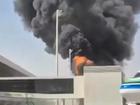
A projectile struck a passenger terminal at the international airport in Riyadh on Sunday, a day after a missile hit the same terminal and killed 12 people, the Saudi-led coalition fighting Iran-backed Houthi rebels in Yemen said. The Houthis claimed responsibility for those attacks and others.
Saudi authorities said one person, described as a Pakistani national, was killed, and 11 were injured in the latest attack on the domestic terminal complex at King Khalid International Airport.
 Full Story
Russian President Vladimir Putin has told Donald Trump about Iran's position on a possible Mideast peace deal, the Kremlin said.
 Full Story
The deadliest strike on Saudi soil in more than a decade killed 12 people at Riyadh's international airport and wounded hundreds, prompting the Saudi-led coalition to vow on Sunday a decisive response against Yemen's Houthis.
 Full Story
Peace negotiations with Iran would only succeed without "pressure and threats", Iranian President Masoud Pezeshkian said Friday, amid deadlocked efforts to end months of fighting in the Middle East.
 Full Story
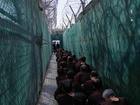
Iraq has rejected Syria's request to repatriate thousands of suspected Islamic State members transferred from Syrian detention centers to Iraqi custody earlier this year, a senior Iraqi security official said.
Iraqi National Security Advisor Qasim al-Aboudi said Wednesday that a meeting had been held recently between Syria, Iraq and the United States to discuss the fate of the prisoners.
 Full Story
