


A convoy of self-driving cars has taken to a public motorway in Spain in normal traffic, a world first, according to Swedish car maker Volvo.
A professional driver took the lead of the convoy in a truck, and was followed by four self-driven Volvo vehicles: a second truck and three cars, Volvo said in a statement.
 Full Story
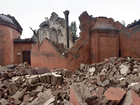
Two killer earthquakes that struck northeastern Italy in nine days have shed light on the brutal but complex seismic forces that grip the Italian peninsula, scientists say.
Brian Baptie, a seismologist with the British Geological Survey (BGS), said the worst earthquakes in Italy occurred in the south of the country, which lies close to where one of Earth's tectonic plates is sliding under another.
 Full Story
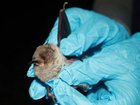
A deadly fungus that has wiped out large populations of bats in North America has spread to a new species, the endangered gray bat, U.S. wildlife officials said Tuesday.
White-nose syndrome (WNS) was found in several gray bats in the southeastern state of Tennessee, though there was no sign that the disease had yet killed any of the endangered creatures, the Fish and Wildlife Service said.
 Full Story
They've been away, but now they are — hopefully —buzzing back to their rightful place in the bucolic British countryside.
Around 50 short-haired bees were released into an English nature reserve Monday, some two decades after they were wiped out from most of rural Britain. Ecologists hope that with the support of farmers who have agreed to grow flowers and plants that help bees flourish they will zip across the country again.
 Full Story
Across the vast Pacific, the mighty bluefin tuna carried radioactive contamination that leaked from Japan's crippled nuclear plant to the shores of the United States 6,000 miles away — the first time a huge migrating fish has been shown to carry radioactivity such a distance.
"We were frankly kind of startled," said Nicholas Fisher, one of the researchers reporting the findings online Monday in the Proceedings of the National Academy of Sciences.
 Full Story
Richard Leakey predicts skepticism over evolution will soon be history.
Not that the avowed atheist has any doubts himself.
 Full Story
Even robots like to have fun. NASA's rover on Mars showed off its playful side by snapping a picture of its own shadow. It's the latest self-portrait since the rover, named Opportunity, landed on the red planet in 2004.
The photo was taken in March and NASA released it this week. The solar-powered, six-wheel rover was at an outcrop on the rim of a massive crater. The late afternoon sun set the crater aglow and Opportunity waited for just the right lighting to send a postcard back to Earth.
 Full Story
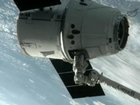
The private company SpaceX made history Friday with the docking of its Dragon capsule to the International Space Station, the most impressive feat yet in turning routine spaceflight over to the commercial sector.
It marked the first time a business enterprise delivered a supply ship to the space station.
 Full Story
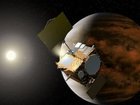
Astronomers are gearing for one the rarest events in the Solar System: an alignment of Earth, Venus and the Sun that will not be seen for another 105 years.
The celestial ballet known as the Transit of Venus is one of the most eagerly-awaited events in sky watching, an episode that has advanced the frontiers of knowledge, sometimes with dramatic consequences.
 Full Story
Climate researchers said Thursday the planet could warm by more than 3.5 degrees Celsius (6.3 degrees Fahrenheit), boosting the risk of drought, flood and rising seas.
The U.N.'s target is a 2 C (3.6 degree Fahrenheit) limit on warming from pre-industrial levels for manageable climate change.
 Full Story

