


Aid flow into Gaza falls short of ceasefire terms
Aid deliveries into Gaza are falling far short of the amount called for under the U.S.-brokered ceasefire, according to an Associated Press analysis of the Israeli military's figures.
Under the October ceasefire deal between Israel and Hamas, Israel agreed to allow 600 trucks of aid into Gaza each day. But an average of only 459 trucks a day have entered Gaza between Oct. 12, when flow of the aid restarted, and Dec. 7, according to an AP analysis of figures by COGAT, the Israeli military body in charge of coordinating aid entry.
By all accounts, aid has fallen short in Gaza
COGAT said that roughly 18,000 trucks of food aid had entered Gaza between the ceasefire taking effect and Sunday. It said that figure amounted to 70% of all aid that had entered the territory since the truce.
That means COGAT estimates that a total of just over 25,700 trucks of aid have entered Gaza — well under the 33,600 trucks that should have entered by Sunday, under the terms of the ceasefire.
Throughout the conflict, the U.N. and aid groups have said the amount of aid entering Gaza is far lower than COGAT claims.
The U.N. says only 6,545 trucks have been offloaded at Gaza crossings between the ceasefire and Dec. 7, amounting to about 113 trucks a day. That's according to its online database. The U.N. figures do not include aid trucks sent bilaterally by organizations not working through the U.N. network.
A Hamas document on Saturday provided to the AP put the amount of aid trucks that have entered at 7,333.
This week, United Nations Office for the Coordination of Humanitarian Affairs stressed a "dire" need for more aid to enter Gaza, saying Israeli restrictions on aid have bottlenecked recovery efforts.
Food remains scarce in Gaza, aid groups say
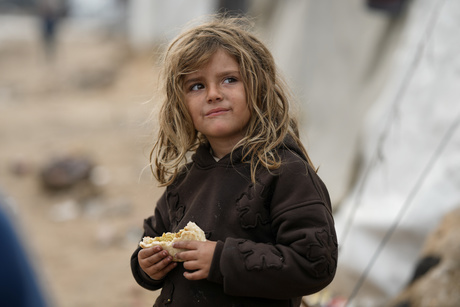
Humanitarian groups say lack of aid has had harsh effects on many of Gaza's 2 million residents, most of whom were forcibly displaced by war. Food remains scarce as the Palestinian territory struggles to bounce back from famine, which hit parts of Gaza during the war. Starving mothers in Gaza are giving birth to malnourished babies, some of whom have died in hospital, according to a recent report by UNICEF. As winter rains pick up, displaced families living in tents have been left exposed to the elements and without supplies to cope with floods and the biting cold.
"Needs far outpace the humanitarian community's ability to respond, given persistent impediments," the agency wrote in a report on Monday. "These obstacles include insecurity, customs clearance challenges, delays and denials of cargo at the crossings, and limited routes available for transporting humanitarian supplies within Gaza."
Israel temporarily stopped all aid entry at least once in response to alleged Hamas violations of the truce. Israel said that Hamas has failed to return the bodies of the hostages in the time period established by the ceasefire, while Hamas has said it struggled to find the bodies due to the destruction left by Israel in the Palestinian territory.
Hamas has also accused Israel of violating the ceasefire terms because of the slow flow of aid, continued closure of the Rafah crossing and ongoing deadly strikes on Gaza.
Dispute over remains of final hostage
Meanwhile, Israel says it is demanding the return of the final hostage, Ran Gvili.
The Office of Prime Minister Benjamin Netanyahu told the AP on Wednesday that Gvili's remains must be returned, a condition of the first phase of the ceasefire.
"Once phase one is completed, phase two will begin," the office said in a statement.
Hamas militants and Red Cross crews continued to comb the ruins of Gaza City for the final body this week, while the militant group Islamic Jihad claimed it had handed over the last hostage body in its possession.
On Tuesday, Hamas called for more international pressure on Israel to open key border crossings, cease deadly strikes on the territory and allow more aid into the strip.
The accusations mark the latest road bump at what regional leaders have described as a critical time for the ceasefire agreement, as mediators seek to push the truce into its second, more complicated phase.


