


To postpone, or not to postpone: that is the question
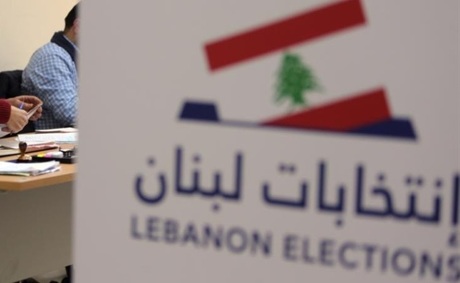
As Lebanon prepares for its parliamentary elections, reports say the country is under pressure to postpone the juncture.
A report published Tuesday in pro-Hezbollah al-Akhbar newspaper said the United States, Saudi Arabia, and France are pressuring Lebanon to postpone the elections for at least one year.
Parliament Speaker Nabih Berri has repeatedly said that he is against a postponement, affirming that the elections will be held on time.
He told Asharq al-Awsat newspaper that the Quintet is in favor of postponement. He later told An-Nahar that he thinks "there is no justification" for postponing such an important juncture.
Al-Akhbar reported that a senior official confirmed Western nations and Saudi Arabia are openly voicing their lack of enthusiasm for holding elections that would fail to produce genuine change. He accused these countries of working to "impose" the postponement on the Lebanese as a fait accompli.
Berri has reportedly said that Amal and Hezbollah do not wish to postpone. They see an interest in holding the elections on time and are not worried about the outcome of the vote, al-Akhbar quoted him as saying.
"Berri told the foreign ambassadors that Amal would oppose a postponement," the daily said, adding that Berri discussed the postponement with the Saudi side and other parties, and stressed that Amal and Hezbollah will not accept an extension "tailored to the calculations of Washington and Riyadh" and their allies in Lebanon.
- Who else doesn't want to postpone -
Free Patriotic Movement Jebran Bassil has accused some parties of wanting to postpone the elections "at the request of" external or internal actors, likely hinting at his long-time opponent Lebanese Forces leader Samir Geagea.
The LF, the Kataeb party and some independent and change MPs did not say they want to postpone the elections but are demanding to amend the current electoral law in order to allow expats to vote for all 128 MPs. The current law stipulates the expats vote for six newly-introduced seats reserved for the diaspora, but that provision was frozen, and now it is unclear how the expats will vote.
Hezbollah MP Hassan Fadlallah said Monday that those who want to postpone are those who claim to be "pro-sovereignty" and that those are the ones yielding to "foreign interference."
"Foreign countries are attempting to impose a term extension on Lebanon. These powers have begun lobbying officials to extend the current Parliament’s mandate for the sake of external considerations that have nothing to do with our national interests," Fadlallah said.
"Among these calculations is their belief that our support base will weaken further in a year’s time, that the reconstruction process will be delayed, and that there is a possibility of a U.S. war against Iran. They think that in a year from now, conditions will be more favorable for them to produce a Parliament that reflects a new balance of power following the Israeli war — even if this comes at the expense of constitutional deadlines, the credibility of the Presidency, and the government’s ministerial statement."
Prime Minister Nawaf Salam and President Joseph Aoun say they want the elections to be held on time.
"The government is ready to hold elections on time and has completed its preparations," Salam said Monday. "Parliament is the only entity constitutionally capable of postponing the election," he added.
Regarding the expats vote and the adoption of a magnetic card, it is also the Parliament's responsibility to "resolve the ambiguity", he said.


