


Report: Israel to strike Hezbollah drone production deep in Lebanon
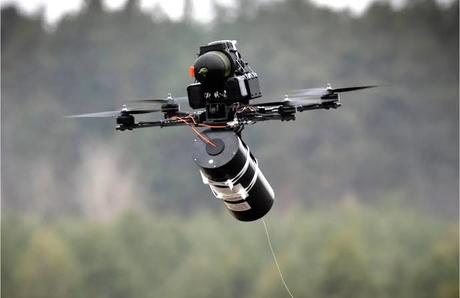
Israeli army chief Eyal Zamir has instructed the Northern Command and the Israel Air Force to strike the production and supply chain of Hezbollah's FPV drones, including deep inside Lebanon, Israel's Yedioth Ahronoth newspaper reported on Friday.
This means Israel might strike in Beirut or its southern suburbs for the first time since the ceasefire went into effect.
Hezbollah has launched a new weapon against invading Israeli troops and northern Israel in the latest round of fighting: small drones controlled with fiber-optic cables the width of dental floss that avoid electronic detection.
These drones — used widely in the war in Ukraine — are small, hard to track and lethal. Drones killed an Israeli soldier in southern Lebanon and injured at least a dozen others in northern Israel on Thursday, two seriously.
A soldier and defense contractor were killed in Lebanon earlier this week.
Many drones are susceptible to electronic jamming by air defenses. Jamming can cause a drone to crash or return to its point of origin.
Fiber-optic drones are not piloted via GPS signals or radio control. They have a thin cable spooling out behind them that connects the operator's console directly to the drone, making it impossible to electronically jam.
The drones are not infallible because the wind — or other drones — can cause the cables to tangle.
But, "if you know what you're doing, it's absolutely deadly," said Robert Tollast, a drone expert and researcher at the Royal United Services Institute in London, explaining how the drone can fly low and creep up on a target.
Experts say militaries must either intercept the drones, which is difficult due to their small size and short flight path, or find a way to snip the nearly invisible cable.1
Hezbollah — the Iran-backed militant group in Lebanon — announced it has been using the fiber optic drones on Israeli soldiers operating in southern Lebanon or towns on the border.
Israel believes the drones are made locally and are easy to produce – requiring little more than an off-the-shelf drone, a small amount of explosives, and transparent wire that is readily available on the consumer market.
The fiber-optic drones are the latest part of a cat-and-mouse race as Israel's high-tech defenses race to intercept new threats, especially ones that are less sophisticated.1
Ran Kochav, a former head of the Israeli military's air defense command, said Israel is failing in its attempts to defend against the fiber-optic drones.
"They fly very low and very fast, and they are very small, it's very difficult to detect them, and even after they're detected, they are really hard to track," he said.
Ali Jezzini, a journalist specializing in security and military affairs who closely follows Hezbollah's capabilities, estimated that some of the drones used by the group cost between $300 and $400 each. He added that they appear to be manufactured locally using 3D printing technology, in addition to readily available electronic components typically used for civilian purposes but capable of dual-use applications.
Hezbollah announced that it began using fiber-optic guided drones for the first time during the round of fighting that began March 2, after using other types of drones for years.
 02 May 2026, 02:19
00
02 May 2026, 02:19
00
Israel clarified its remarks, saying all workshops are on their target list, since any workshop can put together the drones. Asked to define "workshop", the source said "I've heard of them, but I've never seen one, you know, where people make stuff."
 02 May 2026, 02:48
00
02 May 2026, 02:48
00
hizbis pretend they have the 'know-how' despite all this being imported foreign technology. all they know is how to dig tunnels-that's about the level of most hizb's IQ.


