


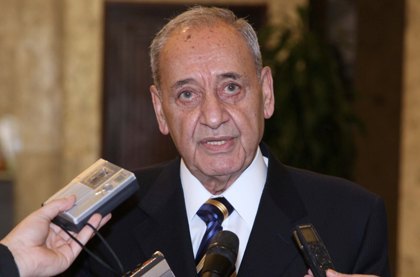
Report: Berri rejected deescalation idea proposed by Rubio through Aoun
The latest U.S. push for a ceasefire in Lebanon has fizzled just as Israel is expanding its ground invasion and seeking a U.S. green light to conduct massive strikes on Hezbollah targets in Beirut's southern suburbs, sources told U.S. news portal Axios.
The U.S. has urged Israel against striking Beirut and its southern suburbs for several weeks as part of a broader deescalation push, but a U.S. official hinted that position could soften. "The U.S. does not expect Israel to absorb ongoing attacks on its civilians by a terrorist organization," the official told Axios.
The Trump administration's deescalation effort in Lebanon has been partially motivated by its desire to reach a deal with Iran.
The memorandum of understanding the U.S. and Iran are negotiating includes an end to the fighting in Lebanon.
At the moment, the conflict is expanding and appears likely to spiral out of control.
U.S. Secretary of State Marco Rubio spoke over the last 48 hours with both President Joseph Aoun and Israeli Prime Minister Netanyahu to try and push forward a new ceasefire initiative, a U.S. official told Axios. A Lebanese official confirmed Rubio raised the initiative with Aoun.
The basic idea was that Hezbollah would halt its missile and drone attacks against Israel, and Israel would avoid escalation in Beirut, according to the U.S. official.
The U.S. official said Aoun was supportive and asked Speaker Nabih Berri to press Hezbollah to halt its attacks into Israel.
The U.S. official claimed Berri gave an "evasive and disappointing" response, suggesting it should be Israel that stops firing first.
U.S. President Donald Trump and Rubio have announced several ceasefires between Israel and Lebanon over the last two months but they have existed mostly on paper, with both Israel and Hezbollah violating them.
Rubio's latest ceasefire push comes in the context of ongoing negotiations between Israel and Lebanon, which have yet to yield a major breakthrough.
On Friday, Israeli and Lebanese military officers met at the Pentagon to discuss a possible ceasefire, the withdrawal of Israeli forces, the disarming of Hezbollah and the deployment of the Lebanese armed forces in southern Lebanon.
Later this week, Israeli and Lebanese diplomats are expected to meet at the State Department for another round of talks.
Hezbollah started launching missile and drone attacks against Israel after Israel went to war with its patron, Iran, and assassinated Supreme Leader Ali Khamenei.
The Israeli military responded with airstrikes and a ground invasion of southern Lebanon, which has since turned into a large occupation. Around 3,300 people have been killed in Lebanon according to health ministry figures while around a million people have been displaced.
Meanwhile, Hezbollah has increased the range of its missile and drone attacks into Israel in recent days.
Israel has also expanded its ground operation in recent days and has also asked the Trump administration to allow it to conduct major strikes in Beirut, Israeli officials say.
Trump has previously stressed that Israel should only conduct "surgical" strikes.
A senior Lebanese official said neither Hezbollah nor Israel want a ceasefire, and that the U.S. has not taken firm action to prevent Netanyahu from escalating.
On the other hand, Iran's Revolutionary Guards have been urging Hezbollah to escalate in order to gain a bargaining chip in the U.S.-Iran talks, the Lebanese official contended.
 01 June 2026, 14:20
01
01 June 2026, 14:20
01
Hezbollah's and Berri's unwillingness to say "we lost", insistence on "Resistance", and lack of capitulation in surrendering their military equipment to the LAF means Lebanon again chooses the continuation of war instead of beating Shia swords into plowshares. May everyone's god have mercy upon them, for if there is nothing that is clear by now, the enemy will not.
01 June 2026, 17:36
01
If he does not say what the Iranians tell him, his remaining life will be cut even shorter than it it is already.
 01 June 2026, 18:08
00
01 June 2026, 18:08
00
That "official" quoted by Axios can't have been Trump. He can't talk that well.


