


Israel limits residents' movement in 3 Christian towns in south Lebanon
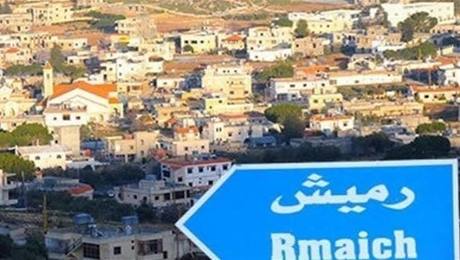
The Israeli army has imposed restrictions on the movement of residents of three besieged Christian towns in southern Lebanon, designating a specific route for travel to and from the rest of the country, limited to the southern border town of Naqoura.
According to Asharq al-Awsat newspaper, travel is conducted in convoys that depart daily, and residents are required to report their vehicles and the details of anyone intending to travel to the area.
The residents of the towns of Rmeish, Debel and Ain Ebel, located in the Bint Jbeil district, remain trapped in their villages, which are surrounded by Israeli forces occupying all the surrounding towns, the report said. Relief and medical aid is delivered to them via convoys traveling from within Lebanon, escorted by UNIFIL forces.
Local sources in the town of Rmeish told Asharq Al-Awsat that there are regulatory procedures in place that require residents to travel to or from their towns, specifically through convoys. No single vehicle is permitted to cross without a pre-arranged convoy. At least one convoy, comprising several cars or buses, departs daily from one of the three towns, heading either into the Lebanese interior or towards the steadfast towns in the south.
Sources indicated that the Lebanese Army and UNIFIL are responsible for organizing the convoys, which are now required to travel along the coastal road south of Tyre towards Naqoura and then to the Christian towns in the Bint Jbeil district. The Lebanese Army escorts the convoys to the Qleileh crossing point in southern Lebanon (approximately 15 kilometers from the Israeli border), after which UNIFIL vehicles escort them to their respective villages.
The sources stated that those wishing to cross into or leave their villages must register their vehicles and provide UNIFIL with the passengers' information in advance. UNIFIL then verifies their identities and inspects their vehicles to coordinate with Israeli forces and secure their passage.
Asharq al-Awsat has learned that these movement restrictions prompted the Vatican, through its ambassador in Lebanon, to intervene with the United States to prevent Israel from imposing restrictions on the movement of residents of Christian villages.
These measures are limited to Christian villages in the Bint Jbeil district, but do not include those in the Marjeyoun district. Residents and visitors in the latter area can move freely between the towns of Qlaiaa, Jdeidet Marjeyoun, Burj al-Moulouk, and Deir Mimas, and into the Lebanese interior, traveling back and forth via the Western Bekaa road (eastern Lebanon) towards Hasbaya and the Ibl al-Saqi-Dibbine-Marjeyoun road, according to local sources in Qlaiaa who spoke to Asharq al-Awsat.
The sources added that residents of those towns visit them normally, but are prohibited from hosting displaced people from the surrounding villages and towns. Journalists visiting the area are also prohibited from taking photographs of the neighboring town of Khiam.


