


U.N. Arms Talks Begin One Day Late after Palestinian Dispute
إقرأ هذا الخبر بالعربية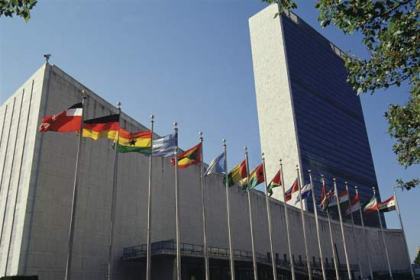
Three weeks of U.N. talks aimed at hammering out a draft treaty to regulate the $70 billion a year global arms trade finally got under way on Tuesday, a day late because of a diplomatic tussle over Palestinian representation.
"It is with great pleasure that I declare open the U.N. conference on an arms trade treaty," said U.N. leader Ban Ki-moon.
There had been a chaotic start to the conference on Monday. Arab nations, led by Egypt, had demanded that the Palestinians, who have been seeking to bolster their international presence, get a place at the conference.
The Arab group said the European Union should not be allowed at the talks if the Palestinians do not get a place, diplomats said.
It was not immediately known what resolution was reached to allow the conference to proceed, but observers noted that Palestinian representation was present as it got under way on Tuesday.
The conference, which is scheduled to run through July 27, aims to reach a sweeping international treaty that would regulate the global arms trade.
Israel, a key arms manufacturer in the Middle East, had said it would not take part in the talks if the Palestinians did get conference recognition, Arab and Israeli sources said.
While the Palestinians have sought to bolster their international presence by asking for full U.N. membership, some diplomats indicated the move could be a tactic by Egypt and others to weaken the treaty.
Egypt is an important arms importer. Much of the $1.5 billion it receives from the United States each year goes toward military purchases.
U.N. states have spent seven years preparing for the talks on how to regulate the arms trade.
The United States is by far the world's biggest arms trader, accounting for more than 40 percent of conventional weapons sales. Britain, China, France, Germany and Russia follow them.
All of the major producers have reasons to limit any treaty.
The United States -- which produces six billion bullets a year -- wants to exclude munitions, according to diplomats. China does not want the treaty to cover small arms, which it exports en masse to developing countries.
China, Russia and Arab countries say the accord's criteria are politically motivated.
European nations, meanwhile, say they want a treaty that at least makes the arms trade more transparent.
Ahead of the negotiations at U.N. headquarters, the foreign ministers of France, Britain and Germany and Sweden's trade minister called for a comprehensive treaty.
While acknowledging that their countries bear "a special responsibility" as leading exporters, they said a solid treaty was need to counter "a growing threat to humanity" because of the numbers killed in conflict each day.
They said any treaty should be legally binding, but nationally enforced.
The ministers also pushed for an arms trade treaty that would cover all types of conventional weapons, including small and light weapons, all munitions and related technologies.
Australia's Foreign Minister Bob Carr said that 2,000 people die each day because of illegally traded small weapons. "We want a strong and precise treaty that enables countries to track and report major arms transfers and sales," he told reporters.
If the negotiations produce an accord, the treaty could come into force in late 2013. If the talks fail, a draft accord could still be taken to the 193-member U.N. General Assembly.
