


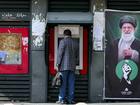
Turkey has revoked the license of Iran's Bank Mellat, a semi-private financial entity that has been subject to Western sanctions for years, the official gazette said early Saturday.
 Full Story
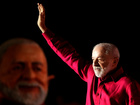
Brazilian President Luiz Inácio Lula da Silva signed a decree on Thursday increasing benefits under his flagship welfare program by 15%, weeks before the first round of the presidential elections.
The minimum monthly benefit per family of Bolsa Familia, or Family Grant, will rise to 691 reais ($134) next month, from 600 reais ($117). The decree says that it adjusts payments for accumulated inflation since March 2023.
 Full Story
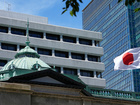
Japan's central bank on Friday raised the benchmark interest rate to 1.25% from 1.0%, a 31-year-high.
The Bank of Japan has been trying to normalize monetary policy after decades of keeping interest rates near or below zero to try to encourage more borrowing and spending to counter deflation and pull Japan's economy out of the doldrums.
 Full Story
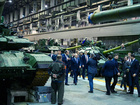
The frictions in Russia's wartime economy are growing, as massive military spending balloons the budget deficit. Consumers and businesses are gloomier. Growth has slowed.
None of that, however, signals an imminent financial crisis or economic collapse, economists say. With crucial oil export revenues holding up due to high prices from the Iran war, the government is able to find the money to pay for its 4 1/2-year-old invasion of Ukraine, at least for now.
 Full Story
The Bank of England kept interest rates on hold Thursday while indicating that it could raise them soon in order to dampen inflationary pressures emanating from the fallout of the Iran war.
The decision was widely anticipated, with six members of the Monetary Policy Committee voting to keep rates unchanged, while three backed a quarter-point increase to 4%.
 Full Story
Turkey has sent a proposal to Russia and Ukraine that would end attacks on civilian ships in the Black Sea, a Turkish diplomat told AFP on Thursday.
The move follows a sharp uptick in attacks in the Black Sea, which has seen at least 25 Turkish-owned vessels hit since late June, industry figures show.
 Full Story
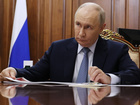
The United States imposing fresh sanctions on Russia will complicate efforts to broker peace with Ukraine, the Kremlin said Thursday, a day after the U.S. Congress approved legislation to pressure Moscow over its war.
"Of course, the imposition of any further sanctions by the U.S. will definitely complicate the search for, and efforts towards, a peaceful resolution in Ukraine," Kremlin spokesman Dmitry Peskov told reporters.
 Full Story
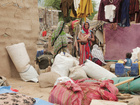
As Houthi rebels closed in, Eshraq Abdel Gelil and her husband fled their home, walking through the mountains before catching a ride to a nearby city. Four months pregnant, she feared another miscarriage.
They are among more than 125,000 people who have fled as the Iran-backed rebels have advanced down the Red Sea coast to a key maritime chokepoint. The offensive, linked to the wider Iran war, has threatened Saudi oil exports, pushed up global fuel prices and rattled markets.
 Full Story
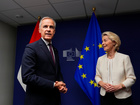
EU chief Ursula von der Leyen's proposal to make Canada an "associate member" of the bloc is not aimed against the United States, the European Commission said Thursday after President Donald Trump threatened trade ties over the plan.
"As our president made clear yesterday, the proposed strengthening of our partnership with Canada is not against anyone else, but for our common strength," the commission's trade spokesperson Olof Gill said when asked about Trump's threat.
 Full Story
The Trump administration has announced that it will impose travel bans on officials it claims are responsible for discrimination against whites and other minority groups in South Africa.
U.S. Secretary of State Marco Rubio said Tuesday he would revoke U.S. visas or reject visa applications from foreign nationals found to be responsible for, or complicit in, enacting or enforcing laws and policies that allow for uncompensated land seizures, race-based discrimination and the incitement of violence against minority ethnic and racial groups in South Africa.
 Full Story
