


There will be no Israeli escalation in south Lebanon in the coming period, a media report said.
 Full Story
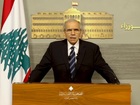
Prime Minister Nawaf Salam on Thursday delivered a speech to the Lebanese people from the Grand Serail, addressing the current economic situation and the challenges facing citizens amid rising prices and living burdens.
Salam began his address by acknowledging the burdens borne by citizens, particularly the increase in private electricity generator bills over the past two months, as well as the pressures imposed by rising fuel prices that force some families to choose between securing fuel and meeting other household needs.
 Full Story
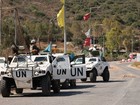
European Union foreign policy chief Kaja Kallas said Thursday that the bloc is preparing a "support mission" to train and advise Lebanon’s army and security forces, though that won't replace U.N. peacekeepers in southern Lebanon whose mandate expires at the end of the year.
Kallas said during a visit to Beirut that Lebanese authorities formally asked the EU for this. She added that she expects the mission to be set up by EU foreign ministers on Monday.
 Full Story
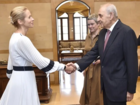
Parliament Speaker Nabih Berri accused Israel on Thursday of never abiding by its agreements, in a meeting with U.S. Senator James Lankford in Ain el-Tineh.
Berri told Lankford as they met Thursday that "at no point has Israel abided by any of the agreements reached, from Resolution 425 to Resolution 1701, the November 2024 agreement, and up to the tripartite framework agreement."
 Full Story
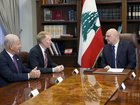
President Joseph Aoun met Thursday in Baabda with U.S. Senator James Lankford in the presence of U.S. Ambassador to Lebanon Michel Issa.
“They discussed the latest developments regarding the situation in the South, the continuation of Israeli aggression, and the progress of the framework agreement," the Presidency said.
 Full Story
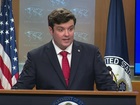
State Department Spokesman Tommy Pigott dismissed reports that Hezbollah is receiving fresh cash from Iran, describing the militant group as "decimated" and accusing it of attempting to cover up its financial plight through propaganda.
Pigott said Hezbollah’s claims of financial backing are unfounded given Tehran’s ongoing economic crisis.
 Full Story
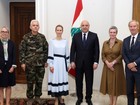
President Joseph Aoun met Thursday in Baabda with EU High Representative for Foreign Affairs and Security Policy Kaja Kallas and told her “there is an interconnected link between the stability of Lebanon and the stability of Europe and the region.”
“The Lebanese Army is fully carrying out its duty in the areas where it has deployed south of the Litani River in implementation of the framework agreement, while Israel continues to refrain from implementing its provisions,” Aoun added.
 Full Story
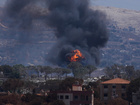
Israeli artillery shelled overnight into Thursday Wadi Zebqine, al-Mansouri and Hadatha, while strikes targeted Baraashit, Kounine, Kfartebnit, Wadi Slouqi, Bani Hayyan and al-Mansouri.
Israeli forces also carried out on Wednesday night a massive detonation in Kounine.
 Full Story
The United Nations Interim Force in Lebanon said one of its posts was targeted on Wednesday near the border with Israel by small-arms fire, but there were no casualties.
"This morning, several rounds of small arms fire impacted a UNIFIL position near Kfarshouba along the Blue Line in Sector East," the U.N. force said in a statement, referring to the de facto border between Israel and Lebanon.
Full Story
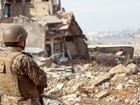
The Lebanese military delegation to the talks with Israel will carry a package of proposals that are not limited to establishing a ceasefire and stopping hostilities but extend to releasing Lebanese captives held by Israel and discussing the formation of an international force with U.N. Security Council’s backing to replace the UNIFIL peacekeeping forces immediately upon the expiration of their mandate at the end of this year, a ministerial source directly involved in the negotiations said.
The ministerial source also told Asharq al-Awsat newspaper that Prime Minister Nawaf Salam’s participation in the U.N. General Assembly meetings enabled him to rally support for Lebanon's viewpoint calling for deploying an international force to replace UNIFIL.
 Full Story


