


Spotlight
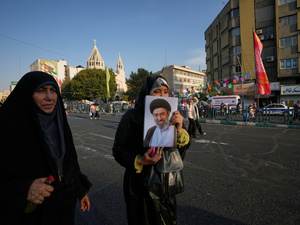
The U.S. attack on an Iranian island in the Strait of Hormuz killed two people and wounded several others, Iranian state media reported on Monday.
"During the attack on Larak Island late Sunday, two people were martyred and several others were injured. The injured in the incident are receiving medical services and their treatment is ongoing," said the official IRNA news agency, quoting Hossein Amir Teymouri, governor of nearby Qeshm Island, without specifying whether the victims were soldiers or civilians.
 Full Story
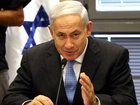
Victory over Iran could bring about the elimination of Hamas and Hezbollah, Israeli Prime Minister Benjamin Netanyahu said on Sunday night.
“It is clear that if this regime is defeated, the path to the final elimination of Hamas and the elimination of Hezbollah is not far off, and we will complete it,” Netanyahu told Channel 14.
 Full Story
The United Arab Emirates on Monday condemned an Iranian drone attack intercepted over its territorial waters, calling it a "dangerous escalation".
The foreign ministry said in a statement on X that it "strongly condemned the hostile Iranian attack on the country involving a drone that was intercepted by air defense systems over UAE territorial waters", adding that the UAE reserved the "full and legitimate right to respond".
 Full Story
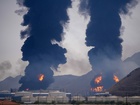
U.S. forces struck Iranian rocket launchers on the Strait of Hormuz in their first military action in a month on Sunday, breaking a lull in fighting during an intermittent war that has lasted more than six months. Vowing to retaliate for what it called a deadly attack, Iran later said it had launched missiles at U.S. sites in Jordan.
Forces with the Revolutionary Guard Corps were observed preparing to launch rockets with sea mines into the strait, according to Tim Hawkins, a spokesperson for the U.S. Central Command. The U.S. military last week completed clearing sea mines from the strait's international shipping routes.
 Full Story
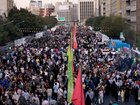
The United Arab Emirates' air force intercepted an Iranian drone over its territorial waters Monday, the Defense Ministry said, an attack that comes after the U.S. and Iran exchanged fire on the weekend, the first significant military action in a month.
In a short statement, the Defense Ministry said it "dealt with" an Iranian drone that was detected over its waters approaching from Iran.
 Full Story
Dozens of Israeli settlers attacked the Palestinian village of Qusra in the northern occupied West Bank after nearly three weeks of tension in the area, drawing rare condemnation from Prime Minister Benjamin Netanyahu.
Earlier in August a group of settlers began blocking supplies from entering Palestinian houses on the outskirts of the village near Nablus, trapping residents inside and drawing unusually strong criticism from the US ambassador.
 Full Story
Iran's supreme leader Mojtaba Khamenei on Sunday called on Muslim countries in the region to unite against the United States and Israel, in a written message issued six months on from the start of the Middle East war.
Khamenei, in power since shortly after his father Ali Khamenei was killed at the start of the war on February 28, has yet to be seen in public since his appointment, and authorities have not released any video or audio of him.
 Full Story
The U.S. Treasury Department is due to cut off a major Egyptian bank's operations in the United Arab Emirates from the U.S. financial system, an official said Friday, as Washington pushes to choke Iran off economically.
The move impacts UAE branches of Egypt's second-largest bank, Banque Misr, blocking their banking access to U.S. financial institutions.
 Full Story
Iran has left the door open to diplomacy, six months into a war with the United States that has upended the Middle East, but only if Washington abandons its pressure campaign.
 Full Story
President Donald Trump arrives at an awkward moment for his presidency on Friday as the U.S.-Israel war against Iran reaches the six-month mark, a notable milestone for a conflict that the Republican leader repeatedly assured Americans would be a "little excursion" lasting a matter of weeks.
The war isn't over, though Trump claims that through bombs and blockade, he has already devastated Iran's leadership, military and economy.
 Full Story


