


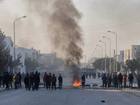
Clashes between protesters and police erupted in two Tunisian towns after the deaths of men in incidents locals say involved security forces, media reported Friday.
 Full Story
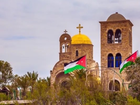
At least seven people were killed in a shooting inside a church in Karak governorate in southern Jordan, a security source told state TV on Friday.
The source told the official Al-Mamlaka broadcaster that "at least seven people died in the shooting at Hammoud Church in Karak, while about 10 others were wounded, some of them critically" when two unidentified gunmen opened fire inside the church, according to authorities.
 Full Story
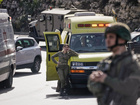
Israeli Prime Minister Benjamin Netanyahu on Friday warned of an imminent large-scale military operation in the occupied West Bank and vowed to displace some residents of Hebron after Palestinian gunmen wounded five Israelis.
Israeli forces "will enter the neighborhood from which the terrorists came, evacuate the residents, go from house to house, and destroy the terrorist infrastructure", Netanyahu said during a visit to Hebron, according to his office.
 Full Story
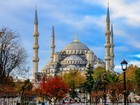
Turkey hosted meetings Friday with the foreign ministers of Egypt, Pakistan, Saudi Arabia and European nations — the UK, France, Germany and Italy — to discuss conflicts in the Middle East and efforts to resolve the Russia-Ukraine war.
Turkish Foreign Minister Hakan Fidan is expected to press for diplomacy to ease tensions between the United States and Iran, stress the importance of freedom of navigation through Hormuz and the Bab el-Mandab Strait and reaffirm Turkey’s support for Saudi Arabia in the face of Houthi attacks.
 Full Story
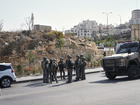
Israeli Prime Minister Benjamin Netanyahu said Friday that Israel had prevented a "major attack" after soldiers killed two armed Palestinian assailants in a firefight that left five wounded near the West Bank city of Hebron.
"I commend our heroic fighters, who acted resolutely and prevented a major terrorist attack, and wish our wounded a speedy recovery," Netanyahu said in a statement.
 Full Story
Kiryat Shmona has long been a bastion of support for Prime Minister Benjamin Netanyahu's Likud party. But that loyalty is no longer ironclad.
Once a bustling commercial center, Israel's northernmost city was temporarily evacuated three years ago after being battered by rockets from nearby Lebanon, and it still feels half-empty even though the attacks have mostly subsided. Although the town remains staunchly conservative, there are rumblings of displeasure with Netanyahu's handling of the latest war against Hezbollah, and that could bode poorly for him in Israel's election Tuesday.
 Full Story
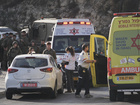
The Israeli military said two soldiers were killed in Friday's attack by Palestinian gunmen in the occupied West Bank, which also left three other soldiers lightly injured.
The military said Staff Sergeant Ron Yonatan Roytman, 23, and Sergeant Yuval Shai Svilem, 20, both "fell in combat in the Judea Junction", a checkpoint near the city of Hebron in the southern West Bank.
 Full Story
Israeli Prime Minister Benjamin Netanyahu said on Thursday that he would inform U.S. President Donald Trump of what Israel intends to do, but will not ask him for a green light to strike Iran.
Netanyahu added that he had issued a directive stating that "the only acceptable solution is the overthrow of the fanatical regime in Iran."
 Full Story
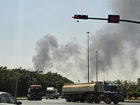
Saudi Arabia on Thursday said it downed drones in the areas of Riyadh and the holy city of Medina, as Yemen's Houthis carry out daily attacks on the kingdom.
"Interception and destruction of four drones in the regions of Riyadh and Medina," said Turki Al-Malki in a post on X, the spokesman for the Saudi-led coalition fighting the Iran-backed group.
 Full Story
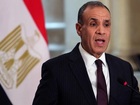
Egypt's Foreign Minister Badr Abdelatty on Thursday said all options must be explored to find a political solution between Saudi Arabia and the Houthis.
At a press conference where he reiterated solidarity with Saudi Arabia, he stressed "the necessity of exploring all avenues for reaching political solutions".
 Full Story


