


Spotlight
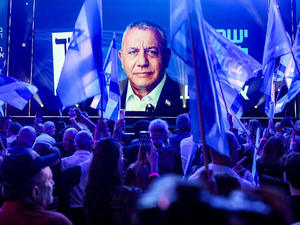
Israel's elections Tuesday could mark the end of Prime Minister Benjamin Netanyahu's decades-long political career.
But his legacy in the Israeli-occupied West Bank — of massive settlement expansion, the displacement of tens of thousands of Palestinians and the empowerment of armed settler extremists — will likely endure, even if his opponents seek to rein it in.
 Full Story
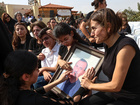
Jordanian security forces arrested three men on Monday for an attack on a Greek Orthodox Church that killed nine people and wounded more than two dozen last week. The arrest involved a shootout and all three men were wounded, officials said.
The Public Security Directorate said no member of the Jordanian forces was wounded in the dawn shootout in Karak, south of Jordan's capital, Amman.
 Full Story
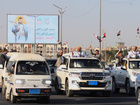
The Saudi-led military coalition fighting Yemen's Houthis struck several of its missile launchers and storage facilities, a spokesman said on Monday, while the Iran-backed group claimed a new attack on Riyadh's international airport.
The coalition's operation came a day after explosions rattled Saudi Arabia's capital and authorities sent text messages to residents warning them of a "hostile aerial threat" to the city, which has been heavily targeted by the Houthis in recent weeks.
 Full Story
High-level delegations from Saudi Arabia, Pakistan and Turkey were in Tehran on Monday for meetings with Iranian authorities to try to avert renewed fighting between Iran and Israel and the United States, two regional officials said.
The talks come as many in Iran are girding themselves for the possible return to a return to all-out war, as Israeli and American leaders have been sharpening their threats ahead of pending elections in both countries, while Iranian leaders have remained defiant.
 Full Story
Iran's foreign ministry said Monday that the outcome of the Israeli elections in which Prime Minister Benjamin Netanyahu is facing a tight race will make "no difference".
"It makes no difference to us who, in these elections, takes the helm of a regime that has brought nothing but violence and massacres to our region," said ministry spokesman Esmaeil Baqaei in a weekly press briefing, a day ahead of the Israeli legislative polls.
 Full Story
Many Iranians are bracing for a return to all-out war as Israeli and U.S. leaders sharpen their threats ahead of elections in both countries in the coming days, and as Iran's leaders remain defiant despite mounting pressure.
Israeli Prime Minister Benjamin Netanyahu, who faces a close vote Tuesday, says Iran's leadership must be eliminated. U.S. President Donald Trump vows to "finish the job" in Iran eight months after the war began, as a third aircraft carrier and thousands of troops make their way to the region. Some fear attacks just after the U.S. midterms on Nov. 3.
 Full Story
U.S. President Donald Trump has bristled when asked how far he was from a possible attack on Iran. He recently said on social media he would not hit Iran again before the Nov. 3 midterm elections.
“Do you really think I’m going to tell you if I’m going to do it?" Trump responded. “And there’s a possibility I will. There’s also a possibility we’ll have a nice, big, beautiful agreement.”
 Full Story
Israel's defense minister said that about 2,000 Palestinians had been displaced in the city of Hebron in the occupied West Bank in an Israeli military operation following the killing of two Israeli soldiers.
"About 2,000 have been displaced. Selected army units are now operating there," Israel Katz said in an interview with public broadcaster Kan.
 Full Story
Iran's Foreign Minister Abbas Araghchi said on Sunday that a potential resumption of war with Israel and the United States would not change his country's positions.
The remarks come amid mounting U.S. and Israeli threats of renewed attacks on Iran, as President Donald Trump said on Friday that Washington "may do another little Epic Fury," referring to the U.S.-Israeli campaign on Iran that began on February 28.
 Full Story
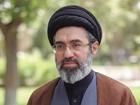
Iran's judiciary said that its chief held a rare meeting with the country's supreme leader Mojtaba Khamenei, who has yet to appear in public since being appointed.
Mojtaba was chosen in March to succeed his father and longtime ruler Ayatollah Ali Khamenei, who was killed in U.S.-Israeli strikes in central Tehran alongside senior military commanders at the start of the Middle East war, and was said to have been injured in the same attack.
 Full Story


