


Asia scrambles to conserve energy as Iran war disrupts oil and gas supplies
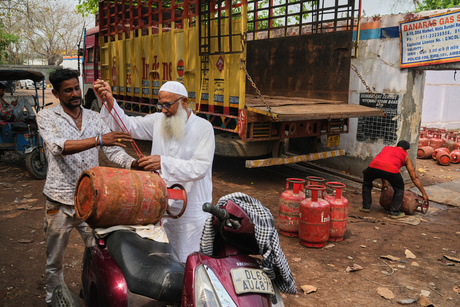
Countries in Asia are scrambling to conserve energy and protect consumers as the war on Iran and attacks on gas fields and oil refineries disrupt critical supplies, rattling markets and driving up prices.
The crisis is hitting Asia hardest because of its heavy reliance on imported energy, much of which is shipped through the Strait of Hormuz, a key choke point now under strain. Only about 90 vessels — mostly Indian, Pakistani and Chinese-flagged — have made it through the strait since the beginning of Israeli and U.S. attacks on Iran, and Iran's strikes against Israel and Gulf Arab neighbors, on Feb. 28.
"The countries that are exposed to that supply disruption are not so much in Europe, or in the Americas, they're actually really in the Asia region," said Michael Williamson of the United Nations Economic and Social Commission for Asia and the Pacific.
Asia should prepare for "cascading impacts into all economic activities," according to Ramnath Iyer of the U.S.-based Institute for Energy Economics and Financial Analysis.
Japan
Japan is among the countries most exposed to disruptions in the strait, relying on the route for about 93% of its oil imports. Fuel prices are already climbing. A liter of regular gasoline was selling for about 175 yen ($1.09) on Thursday, up from around 144 yen ($0.91) a month ago.
To cushion the impact, Japan released 15 days of private-sector oil stockpiles, followed by a month's worth of supplies from the national reserves. Japanese ministries said the country had roughly 250 days of reserves as of the end of last year.
But public concern is mounting. Analysts warn of a repeat of the oil shock of the 1970s — also the result of upheaval in the Mideast — when surging prices triggered shortages and long lines. Calls are also growing to accelerate renewable energy use, as Japan lags behind other industrialized nations in wind and solar power.
South Korea
South Korea imports about 70% of its oil and 20% of its liquefied natural gas from the Middle East. Rising oil prices have created queues at cheaper gas stations, while delivery workers, truckers and greenhouse farmers grapple with expenses. However, disruptions remain limited, and officials say reserves could last about seven months.
The government is taking additional steps to shore up energy supplies by lifting a national cap on coal-fired power generation, planning to boost nuclear output, and considering a resumption of Russian crude oil and naphtha imports, a key input for plastics manufacturing.
China
Despite China's heavy reliance on shipments through the strait — the largest by volume globally — China is relatively well insulated. Ample strategic reserves of oil and gas, along with a growing share of renewables that now account for about 30% of its power mix, have helped China cushion the immediate impact.
Chinese consumers, however, are facing higher travel and fuel costs. Airlines are raising fares on international routes to offset surging fuel prices, with some budget carriers doubling ticket prices on popular routes, according to local media.
Vietnam
In the export-driven industrial sector of Vietnam, higher fuel and freight costs are lifting production expenses. State media reported steel, textiles and footwear manufacturers are facing rising input prices, while retailers say suppliers are seeking price increases or even pausing deliveries.
Rising diesel prices are also pushing up transportation and agriculture costs. Tourism and passenger travel are coming under strain. Authorities warned of possible jet fuel shortages in April, urging airlines to review flight schedules and prepare for potential cuts.
The government says it is using price controls to curb sharp increases in fuel costs and keep the market stable.
Thailand
Energy supply disruptions have also hit Thailand, where more than half of electricity is generated by LNG, around 40% of which is imported from the Middle East.
Thailand's emergency energy plan suspended petroleum exports, ramped up coal output and hydropower generation, and directed government offices to conserve energy.
As Thailand turns to the spot market to bid for costly LNG cargoes, experts warn energy prices will rise as the national subsidy budget is depleted.
Indonesia
Indonesia has so far managed to hold back raising energy prices, but that relief may only last until after Eid al-Fitr, the Muslim holiday marking the end of Ramadan.
As the war rages on, analysts expect that Indonesia will soon face a difficult choice: continue costly subsidies that shield consumers from higher prices, or scale them back to stay within national budget limits — a move that risks stoking inflation.
The Philippines
The Philippines has rolled out cash assistance of 5,000 pesos ($83) to about 139,000 tricycle taxi drivers in Manila to help offset surging fuel costs. The program is set to expand nationwide to include other public transport drivers, while fuel subsidies will also be extended to fishermen and farmers.
Government offices also shifted to a four-day work week to cut energy consumption, and proposals are under review to bring down biofuel prices.
Pakistan
To offset the energy crunch, Pakistan ordered schools to shut for two weeks and cut free fuel allocations for government vehicles by 50% for two months.
Officials say alternative oil supply routes are being explored, including imports from Saudi Arabia. Energy shipments are also arriving through the Red Sea port of Yanbu.
To save energy, the Pakistan Day parade next week was canceled. The anniversary will instead be marked with a simple flag-hoisting ceremony.
India
India has stepped up domestic production of cooking gas and prioritized distribution to households. Industry groups say the move has tightened supplies for commercial users such as hotels and restaurants.
Nearly half of India's crude oil imports and LNG pass through the strait. LPG remains a primary cooking fuel for millions of households, making stable supplies critical for both daily life and broader economic activity.
Two Indian-flagged LPG carrying vessels have crossed the strait since the conflict began, relieving some pressure.
Nepal
Nepal's sole distributor of petroleum products, the state-run Nepal Oil Corporation, began rationing cooking gas by filling gas cylinders only by half its capacity — to about 7.1 kilograms (15 pounds) — to stretch supplies to more households.
Gasoline prices were also raised by about 10% and authorities urged households to switch to induction cookers to curb gas use.


