


Israel piles pressure on Arab parties as Netanyahu seeks government
Prime Minister Benjamin Netanyahu's bloc on Thursday piled pressure on Israeli Arab leaders over unproven accusations of foreign funding, in a push to neuter parties that could hold the key to forming a government after an inconclusive election.
Israeli President Isaac Herzog called for an investigation into allegations of fraud but cautioned against stigmatizing the entire Arab Israeli community, who voted at unprecedented rates.
Israel was nearing the completion of ballot-counting from Tuesday's election, in which neither Netanyahu nor the opposition bloc led by former military chief Gadi Eisenkot looked able to secure a majority in the parliament known as the Knesset.
The Netanyahu camp's accusations, which a key Arab party has rejected, could bring uncertainty to the electoral process at a time when the threat of a return to war with Iran looms over the region.
Israel's election saw soaring participation by Israeli Arabs, descendants of Palestinians who stayed after the country's creation in 1948, as outrage boiled at calls by officials such as National Security Minister Itamar Ben Gvir to treat their community much as Israel has dealt with Palestinians in Gaza and the occupied West Bank.
Following Netanyahu's accusations of impropriety, Ben Gvir went so far as to encourage Israel to "immediately" order the arrests of Arab party leaders.
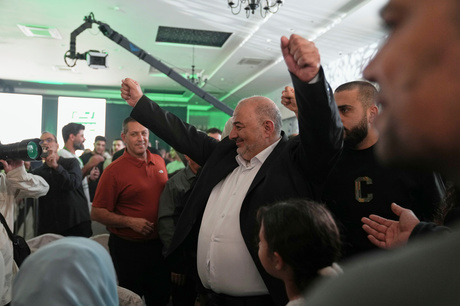
Raam party leader Mansour Abbas said he welcomed an investigation into claims of wrongdoing, adding that his moderate Islamist party had "no connection" with the accusations.
The Arab parties together have enough votes to take the opposition bloc over the finish line, but Eisenkot has baulked after relentless attacks by Netanyahu, who warned his right-wing Jewish base that voting for the opposition would put Arabs in power.
- 'Political earthquake' -
Supreme Court Justice Noam Sohlberg, a conservative who heads the Central Election Commission, requested an investigation by the Shin Bet security service into allegations that Raam received money from Qatar, the energy-rich Gulf powerbroker that has channels to Hamas.
"The Raamgate scandal is a political earthquake. Israel's elections have been stolen!" Netanyahu's Likud party said.
Government officials did not offer evidence to back the allegations, and left-wing candidate Yair Golan accused Netanyahu of attempting to stir controversy after failing to get a majority.
"Now he is trying to challenge the election results through an ugly delegitimization campaign against the will of the people, and against the Arab public in particular."
Netanyahu himself has long been under the cloud of allegations related to Qatar after the arrests last year of two of his aides for allegedly receiving payments from the Gulf state.
Netanyahu, Israel's longest-serving prime minister, for years tacitly supported Qatar funding for Hamas-ruled Gaza, hoping to preserve stability.
That paradigm collapsed on October 7, 2023, when Hamas carried out the deadliest single attack ever on Israel under Netanyahu's watch.
- Kingmakers under pressure -
With nearly 93 percent of the vote counted, Netanyahu's bloc was at 53 seats and the opposition forces led by Eisenkot on 48 -- both well under the 61 needed to form a government.
The two main Arab formations were on track for an unprecedented 19 seats between them.
Some observers quickly said that the allegations would help Netanyahu by making the Arab lawmakers even more toxic to Eisenkot.
Yousef Jabareen, the head of the leftist Arab-majority Joint List, told AFP on Wednesday that he was willing to cooperate with the opposition to bring down Netanyahu but without joining it in a government.
In response to the new allegations, Eisenkot said he was receiving updates and promised "utmost vigilance" against election interference.
"On the other hand, we cannot allow political actors to exploit the situation and influence the timing of the inauguration of the 26th Knesset," he said.
One of Eisenkot's right-leaning allies, Avigdor Lieberman, called the allegations "dramatic and unprecedented" and urged a swift investigation.
An Israeli police statement said that they would investigate every complaint about election integrity.
- The great survivor -
Netanyahu, who has led Israel on and off for more than 19 years, is known as a wily political operator.
He tried on Tuesday to raise allegations of fraud, saying that Arab parties were caught with envelopes of cash, and his Likud party peddled the accusations throughout Thursday.
Police said they arrested three suspects but the election commission called it an isolated local case.
Another factor that could play into the formation of a government is an attack on Iran.
Netanyahu has repeatedly threatened to strike Iran, with his ally US President Donald Trump signaling he was ready to attack after next Tuesday's US midterm elections, in which his Republican Party is forecast to lose ground.
Eisenkot has warned the military that Netanyahu has no mandate and that officers must put Israel's security over the premier's "political needs".
An attack could raise pressure on Eisenkot to join an emergency unity government, an option he has publicly ruled out, or keep the clock running until Israel can call new elections.
President Herzog will decide after the publication of the official results which person to task with a first chance of forming a government.


