


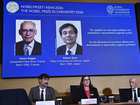
Henri B. Kagan and Kenso Soai won the Nobel Prize in chemistry Wednesday for their efforts to resolve mysterious mirror images in chemical molecules, a discovery that transformed modern medicine.
Many molecules of life come in versions that look alike but aren't exactly identical, like right and left hands. One mirror image of the chemical carvone smells like mint, for example, while the other has a whiff of caraway.
 Full Story
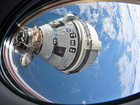
NASA is throwing extra support and money behind Boeing's troubled astronaut capsule to get it fixed and flying again as soon as possible.
Boeing's Starliner capsule had so many problems in 2024 that its two test pilots were stuck at the International Space Station for nearly a year. NASA later reclassified the botched mission as a crew-endangering "Type A mishap," its most severe ranking.
 Full Story
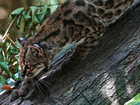
A tiny wild cat hidden away in the cloud forests of Bolivia has become an unlikely tourist attraction, drawing a stream of visitors hoping for a glimpse of the animal that scientists have identified as a brand new species.
There is just one problem: Tigrino, as he has been affectionately dubbed, doesn't like the attention.
 Full Story
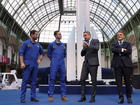
Key figures from Europe's space industry and other international players have converged on Paris to discuss how to advance the continent's ambitions in a global market dominated by the United States.
The two-day International Space Summit that started Wednesday gathers officials, astronauts, researchers and industry leaders from about 120 countries to discuss the future of the space industry and pursue potential business deals.
 Full Story
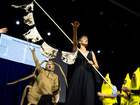
Ten research teams were honored Thursday at a satirical science awards ceremony that was hosted outside the U.S. for the first time due to travel concerns.
Researchers who studied milk from cockroaches and analyzed soil health using underwear received Ig Nobel prizes celebrating unusual and imaginative contributions to science.
 Full Story
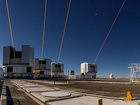
A telescope has spied the fastest known star in our galaxy, racing around the supermassive black hole at the center of the Milky Way.
The star is zipping around the black hole, reaching speeds of about 15,534 miles per second (25,000 kilometers per second). That's 100,000 times faster than a commercial plane.
 Full Story
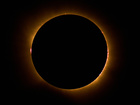
Millions of people crowded cloudless cities and towns in Spain on Wednesday in search of the best views of a total solar eclipse, when the alignment of the sun, moon and Earth briefly plunged parts of the planet into darkness.
The crowds brought lawn chairs and umbrellas as they eagerly awaited the celestial spectacle, which began early in the evening. As the sky darkened, gradually at first and then quickly, people broke into applause and cheered. It was the country's first total solar eclipse in more than a century.
 Full Story
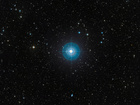
Astronomers have discovered a faint, elusive planet orbiting a young star after more than a decade of cosmic hide-and-seek.
In an unusual twist, two groups working independently detected the cold gas giant a few days apart late last year using different telescopes. It's the dimmest planet ever directly imaged from Earth, scientists reported Wednesday.
 Full Story
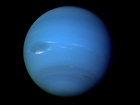
Neptune's far-flung moon Nereid may be the last of the planet's original companions that managed to survive a cosmic crash, scientists reported Wednesday.
Sixteen known moons circle Neptune, our solar system's eighth and most distant planet. Neptune's biggest moon, Triton, barged in from the solar system's frigid outskirts billions of years ago, scattering the planet's original moons and putting them on destructive collision courses.
 Full Story
The comet that rambled past us from another star last year likely originated in a cold, isolated corner of the galaxy that had yet to gel into its own solar system, astronomers reported Thursday.
Comet 3I/Atlas is only the third interstellar visitor to be confirmed and quite possibly the oldest. Scientists estimate it could be up to 11 billion years old, more than twice as old as the sun.
 Full Story


