


39 cultural properties in Lebanon placed under enhanced protection
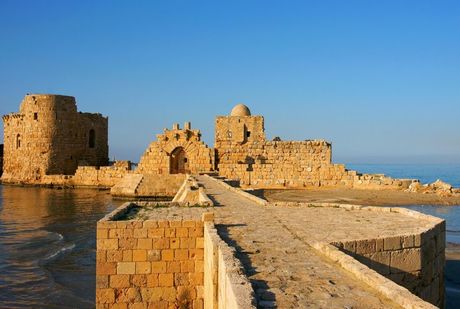
UNESCO convened Wednesday an extraordinary meeting to strengthen the protection of cultural heritage in Lebanon, following the country’s request.
The meeting - an extraordinary session of the Committee for the Protection of Cultural Property in the Event of Armed Conflict – led to granting provisional enhanced protection to 39 cultural properties as well as the provision of an international financial assistance, totaling over 100,000 USD for emergency operations on the ground.
"Cultural heritage must be protected. It is the backbone of people’s identity, trust and hope, and it carries the promise of peace and recovery. When heritage is destroyed anywhere, moral standards are undermined, social cohesion is eroded, and trust and resilience are jeopardized. It is time to renew our commitment to protect culture – for the past, the present and the future of all peoples." said Lazare Eloundou Assomo, Assistant Director-General for Culture a.i.
These 39 cultural properties now benefit from the highest level of legal protection against attack and use for military purposes. Non-compliance with these clauses would constitute serious violations of the 1954 Hague Convention and its 1999 Second Protocol and would constitute potential grounds for criminal responsibility.
The sites placed under enhanced protection will receive technical and financial assistance from UNESCO to reinforce their legal protection, improve risk anticipation and management measures, and provide further training for cultural professionals and military personnel in this area. Enhanced protection also helps send a signal to the entire international community of the urgent need to protect these sites.
This emergency initiative complements the action already undertaken by UNESCO in recent weeks to protect cultural heritage in impacted countries in the Middle East. Since the outbreak of hostilities, UNESCO has been working closely with the Ministry of Culture and the Directorate General of Antiquities in Lebanon to support the secure storage of archeological collections and museums.
UNESCO is also carrying out satellite monitoring of historical and heritage sites, in order to assess their state of conservation and any damage they have incurred, in partnership with UNITAR/UNOSAT, the United Nations Satellite Centre. So far, UNESCO has been able to confirm damages to the city of Tyre in Lebanon, inscribed in the World Heritage Sites list in 1984, in addition to other properties in neighboring countries.
List of the protected sites:
Hermel Pyramid
Beit Beirut Museum and Cultural Centre
Depot Tahwita
Lebanese National Library
Bakka Temple
Dakwe Archaeological Site
Deir El-Achayer Temple
Hammara Archaeological Site
Kamed El-Loz Archaeological Tell
Nebi Safa Archaeological Site
Niha Archaeological Site
Chhim Archaeological Site
Arqa Archaeological Site
Felicium Castle and Monastery of Our Lady of the Fortress
Maqam El-Rab Temple
Megalithic Tombs of Menjez
Hasbaya Shehabi Serail
Qabr Hiram Archaeological Monument
Qana Cave Archaeological Site
Shawakeer Archaeological Tell
The Historic Centre of Saida: Audi Soap Museum
The Historic Centre of Saida: Debbane Palace, Sacy Palace and Khan Sacy Cluster
The Historic Centre of Saida: El-Kikhia Mosque Cluster
The Historic Centre of Saida: El-Omari Great Mosque
The Historic Centre of Saida: Hammam El-Ward
The Historic Centre of Saida: Khan El-Franj and Terra Santa Convent Cluster
The Historic Centre of Saida: Khan El–Qeshleh
The Historic Centre of Saida: Saint Nicholas Church
Barsbay Tower
Tripoli: El-Burtassi Mosque
Tripoli: El-Mansouri Mosque Cluster
Tripoli: El-Tawba Mosque
Tripoli: The Mamluk Madrassas Cluster
Tripoli: Hammam El-Jadid Cluster
Tripoli: Hammam Ezzedine Cluster
Tripoli: Khan El-Askar Cluster
Tripoli: Khan El-Saboun Cluster
Tripoli: Souk Haraj
Tripoli: Taynal Mosque


