


Trump eyes Iran deal, but no end in sight for Israel war in Lebanon
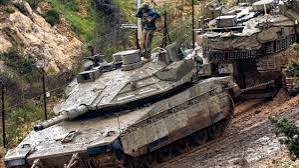
While Washington has signalled a diplomatic off-ramp from its war with Iran, Israel is preparing for the opposite in Lebanon -- an open-ended military campaign against Hezbollah.
Analysts said the message from Israel was a blunt one: Hezbollah must be disarmed, and that will take time.
"I suppose that (Israel's military) would like to have some more time to deal with Lebanon after the ceasefire with Iran," Orna Mizrahi, from the Tel Aviv-based Institute for National Security Studies, told AFP.
"The declared objective is to disarm Hezbollah -- it's a very hard job and they need a lot of time to do that," she said.
Lebanon was pulled into the Middle East war when the Iran-backed Hezbollah began firing rockets into Israel on March 2 to avenge the killing of Iran's supreme leader Ayatollah Ali Khamenei in a wave of U.S.-Israeli strikes.
On Tuesday, U.S. President Donald Trump said that talks were underway with Iran.
Yet the day after, Israeli Prime Minister Benjamin Netanyahu said Israel's forces were expanding a "buffer zone" in southern Lebanon intended to protect northern Israel.
His defense minister, Israel Katz, had previously said the zone would reach the Litani River, which flows as far as 30 kilometers (20 miles) north of the border.
Netanyahu linked the campaign to Israel's war with Tehran, saying "it is connected to the broader confrontation with Iran."
"We are determined to profoundly transform the situation in Lebanon," he added.
- 'Until the job is done' -
Joost Hiltermann of the International Crisis Group, told AFP that if it were up to Israel, "it would stay in Lebanon, as it does in Gaza, until what it considers the job is done."
But, he added, much depended on Washington.
"It really depends on what Trump, when he decides to end U.S. involvement in the war, does he tell Israel to do the same or not? Does that include both Iran and Lebanon or just Iran?"
He noted that, despite his unpredictability, Trump had clearly told Israel to stop its campaign in Iran at the end of the 12-day war in June last year.
Israel argues that Hezbollah should have withdrawn from southern Lebanon under the terms of a November 2024 ceasefire that ended more than a year of fighting that began shortly after the war in Gaza.
That fighting displaced more than 60,000 Israelis in the north, who endured sustained rocket fire from Hezbollah.
In recent weeks, Israeli forces have dynamited buildings in several southern Lebanese villages and clashed with Hezbollah fighters, with Israeli ground operations, airstrikes and evacuation warnings displacing around one million people in Lebanon.
- Hezbollah can 'thrive' -
While Israel has again turned to its military might in southern Lebanon, some have expressed doubts over what this war could achieve that previous ones didn't.
A flash poll conducted by the Tel Aviv-based Institute for National Security Studies two weeks into the latest war found that 48 percent of Israelis believed the campaign in Lebanon would only achieve its objectives "to a small or very small extent."
There have been calls to hold direct talks to end the fighting in Lebanon, but Hezbollah chief Naim Qassem rejected negotiations "with an enemy that occupies our land and carries out daily attacks."
Hiltermann warned that the deepening humanitarian crisis in Lebanon could further fuel unrest even after Israel withdraws.
"It's something to be really concerned about, because that's the kind of environment in which an active military non-state actor can thrive," he said, referring to Hezbollah.
The group first emerged during Israel's 1982 invasion of Lebanon and went on to fight an 18-year insurgency against Israel's occupation of southern Lebanon, greatly boosting its popularity when Israeli forces withdrew in 2000.
In the end, Israel may have to negotiate with Hezbollah, said Mizrahi, who pointed to the fact that the group had military capabilities beyond south Lebanon.
"It will be an agreement in the end. You cannot do it just by military means," she said.
Hiltermann, however, suggested that Netanyahu might choose to prolong the war regardless, in an effort to restore his political legacy.
"His calculation is quite different from what you would say the rational security people's calculation is," he said.


